 venuefinder.nz
10 Modern Baby Shower Ideas for a Kiwi Celebration
You've booked a lovely spot, the guest list has crept past immediate family, and now the practical questions start. Will a brunch suit the grandparents? Can the venue handle a pram-friendly setup? Is it better to spend on food, florals, or a room that already looks polished without much styling?
That tension is normal, especially for New Zealand hosts planning a shower that needs to feel personal without becoming a full-scale event job. The strongest baby shower ideas usually come from matching the celebration to the parents-to-be, the season, and the venue, then choosing details that do more than one job.
A good room saves money on décor. An in-house catering team cuts coordination time. A venue with trusted local suppliers makes cakes, flowers, signage, and setup much easier to organise, particularly if you're planning around work schedules, school pickups, or guests travelling in from other parts of town.
This guide is built for that reality. It's an NZ-focused planning kit, not just a mood board. Each idea pairs style with practical choices, including Kiwi supplier types, venue suggestions from our own listings, and realistic ways to keep the budget under control. If you're still shaping the look and feel, our guide to seasonal wedding themes for New Zealand celebrations is also useful for colour palettes, flowers, and venue styling that translate well to baby showers.
The goal is simple. Help you plan a beautiful, manageable celebration that feels generous to guests and calm to host.
1. Minimalist Botanical Theme
A botanical baby shower works because it doesn't fight the venue. It softens a café, lifts a private dining room, and looks right at home in a garden or courtyard. Soft sage, cream, muted white, timber, and plenty of greenery usually give you enough visual impact without needing a truckload of props.
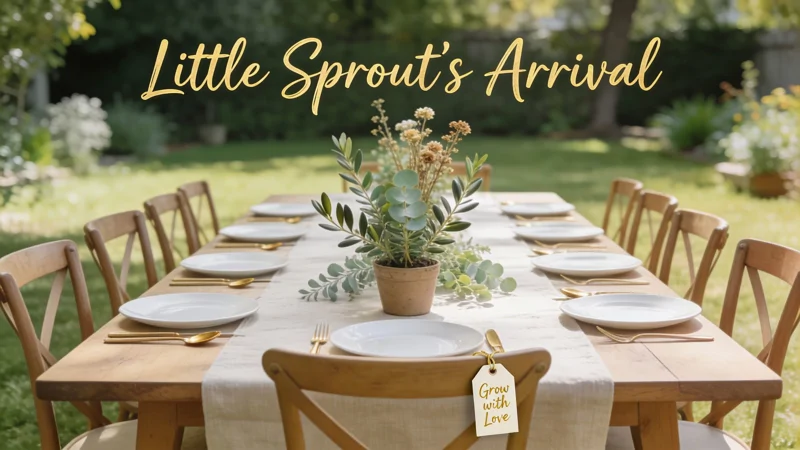
I'd keep the palette restrained. Eucalyptus-style foliage, olive-toned napkins, clear glass vases, and natural linen are often all you need. In NZ settings, native touches like fern fronds or a subtle pōhutukawa-inspired red accent can make the styling feel local rather than copied from overseas mood boards.
How to make it look polished
The biggest mistake with this theme is under-styling the tables and over-styling the backdrop. Guests spend more time seated, eating, chatting, and opening gifts than they do standing under a balloon feature. Put your dollars where people will notice them.
- Use potted plants twice: Set them on tables first, then send them home as favours or use them in the nursery later.
- Choose one hero texture: Linen runners, rattan chargers, or timber boards are enough. You don't need all three.
- Ask florists for hardy pieces: Dried stems and structured greenery travel well and won't collapse halfway through the event.
For inspiration on cohesive seasonal styling, our guide to wedding themes for your NZ celebration is useful beyond weddings too. The same principles apply to baby showers. Match the theme to the setting instead of forcing the setting to match the theme - if the venue already has natural light, plants, or timber finishes, let those features do half the decorating work.
2. Interactive Prediction and Well-Wishes Game
Guests arrive, pick up a drink, and pause at one table that gives them an easy way to contribute straight away. That is why prediction and well-wishes cards work so well at baby showers. They create conversation early, suit grandparents as much as friends from work, and give the parents something they will want to keep.
The difference between a forgettable game and a meaningful one is the prompt. Standard guesses like birth date, weight, and time are fine, but the cards become far more valuable when you mix in questions guests can answer from the heart. Ask what the baby might love by school age, what quality they hope the child inherits, or one piece of parenting advice the family can return to later.
Set it up properly and participation rises
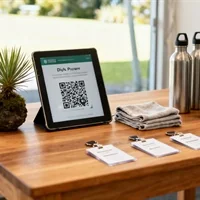
Placement matters. A stack of cards left on a gift table gets ignored. A styled station near the entrance, coffee point, or drinks table gets used because guests encounter it while they are still settling in.
In New Zealand venues, I usually recommend keeping this station compact and practical. Use a small sign, a jar of good pens, and a box or album that matches the rest of the styling. If you are booking a hall, café, private dining room, or garden venue through our listings, ask the venue where guests naturally pause on arrival and place the station there rather than forcing it into an empty corner.
A baby trivia question can help break the ice, but keep it to one or two prompts so the activity does not drift into full party-game territory. A commonly used example from this baby shower trivia question list is the fact that babies are born with more bones than adults. It is light, easy, and works across mixed age groups.
Practical ways to make it feel polished
- Print guided prompts: Guests write better messages when the card gives them a clear direction.
- Separate the card types: Use one design for predictions and another for advice or wishes, so the final keepsake feels organised.
- Choose a proper container: A keepsake box, bound album, or lidded timber crate holds up better than a loose stack of cards.
- Budget for presentation: A local stationer can print a small batch beautifully, but a home-printed version on textured card also works if funds are tight.
If the shower includes food service from the venue or an outside supplier, match the activity timing to the catering flow. Fill-in cards work best before the meal or while people wait for tea and coffee. Our guides to NZ wedding catering options are useful here too, because the same pacing rules apply to baby showers.
If you only include one organised activity, this is the one I would choose. It is inexpensive, low-pressure, and still meaningful long after the balloons are gone.
3. Locally-Sourced Charcuterie and Grazing Boards
Grazing boards suit baby showers better than many plated menus. They're relaxed, they photograph well, and they let guests eat when they're ready instead of waiting for a formal service rhythm. That matters at celebrations where people arrive in waves, stop to chat, and move between gift tables, activities, and seating areas.
Where hosts get this wrong
They either order too little variety or make the board impossible to eat neatly. Large wedges with no serving tools, sticky items placed beside dry crackers, and no labels for dietary needs create queues and confusion.
- Build in dietary options: Include at least one clearly marked vegetarian section and easy gluten-free picks.
- Label standout items: Guests enjoy the food more when they know what they're trying.
- Stage refills in waves: A board looks fresher when it's topped up gradually, not loaded all at once.
Grazing also helps hosts manage staffing. You may not need full table service, and this can free up part of the budget for florals, cake, or a photographer. If you're comparing caterers and food styles, check out our curated lists of New Zealand caterers and cake suppliers.
4. Gender-Neutral Nursery Essentials Registry
The easiest registry to shop is the one that answers a guest's quiet question before they have to ask it. What do the parents still need, what suits the nursery, and what will still be useful in six months? Get that right and the gifts feel helpful, not random.
A gender-neutral registry suits a lot of New Zealand baby showers because it keeps the focus on function and longevity. It also makes shopping simpler for guests buying online, visiting a local baby boutique, or pooling money for one larger item. Good choices include muslin wraps, sleepwear in soft neutrals, bath basics, board books, storage baskets, cot sheets, pram accessories, and simple nursery pieces such as hooks or lamps.
The strongest registries are edited. Too many options slow people down, while a list that is too narrow can feel prescriptive.
How to build a registry guests will use
Set it up around daily routines rather than one long shopping list. Guests make faster decisions when they can buy for sleep, feeding, bath time, outings, or nursery organisation.
- Cover different budgets: Add lower-cost gifts like bibs, books, washcloths, and teething toys, then include a few bigger items for group gifting.
- Be clear about style: A short note on preferred colours, materials, or brands prevents well-meaning duplicates that do not suit the room.
- Mix practical and sentimental gifts: Everyday basics matter most, but one or two keepsake options give close friends and family something more personal to choose.
- Leave a little flexibility: Open categories such as 'favourite children's book' or 'size 6 to 12 month clothing' stop the list from feeling too rigid.
For NZ hosts, I usually recommend choosing products that are easy to source locally and easy to exchange if needed. That might mean using a baby store registry, a universal online list, or even a simple shared document if the shower is small. The trade-off is straightforward. A formal registry is tidier, but a plain list can work better when guests are shopping across different Kiwi retailers or supporting local makers.
Check whether your venue can accept delivered gifts before the event or hold larger parcels during the celebration. That small logistics detail saves a lot of boot-space juggling and helps the day run smoothly.
A registry should support the celebration, not take over the invitation. Mention it clearly, keep the wording warm, and let the event itself stay centred on the parents and the people showing up for them.
5. Pastel Dessert Table with New Zealand Treats
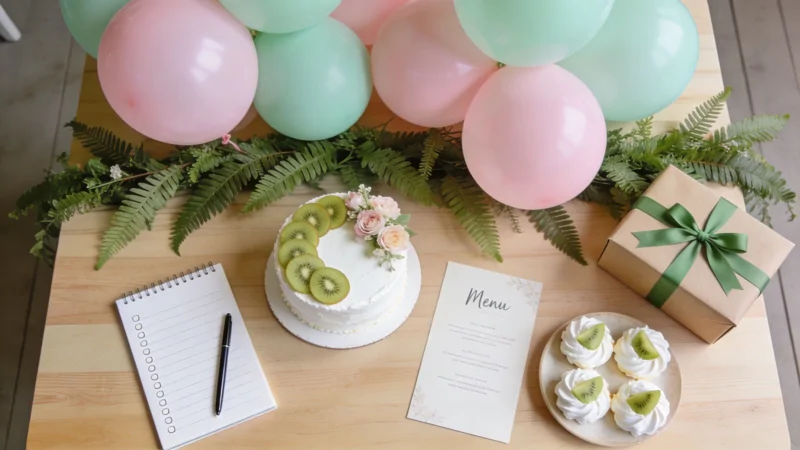
If you want one strong visual feature, make it the dessert table. It does the work of décor, creates a natural photo area, and gives the event a centrepiece without forcing guests into formal entertainment.
Pastels still work, but keep them soft and modern. Dusty pink, butter yellow, pale apricot, sage, lilac, and cream are easier on the eye than a full rainbow. Then layer in NZ favourites like lamingtons, mini pavlovas, iced biscuits, slices, and good chocolate alongside a main cake.
The smartest way to style it
Height matters more than quantity. Three tiers, cake stands, domes, and plinths make a modest dessert selection look abundant. Flat trays spread across one table usually look underdone unless you have a lot of product.
- Choose one hero cake: Let everything else support it.
- Label allergens clearly: Dessert tables often include nuts, dairy, and gluten without guests realising.
- Use edible décor: Fresh berries, petals, and piped details often look better than extra plastic props.
A common planning mistake is placing the dessert table in a dark corner because it needs 'space'. Don't do that. Put it somewhere visible, but not so central that guests block the flow while chatting and taking photos.
You'll also get more value from a dessert stylist or cake maker if they can work directly with the venue on access times, refrigeration, and pack-down. That coordination saves a lot of stress on the day.
6. Personalised and Sustainable Keepsake Favours
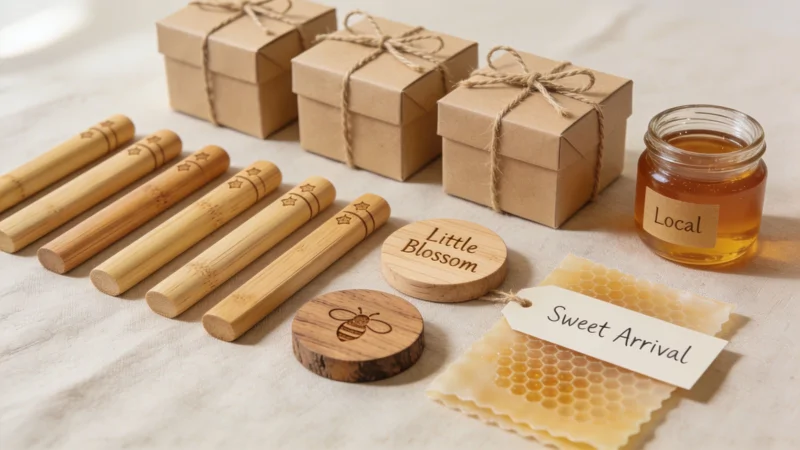
The favour usually gets packed last and judged fast. Guests notice two things straight away. Whether it feels useful, and whether it suits the rest of the shower. That makes keepsake favours a smart place to simplify. In New Zealand, the best options tend to be local, consumable, or reusable. A small jar of regional honey, a hand-poured soy candle, a tea blend from a local maker, or seed packets for a spring shower all feel thoughtful without creating clutter. They also travel well, which matters if guests are driving home from a venue or taking items back on a flight.
Favour ideas that pull their weight
The most practical favours do two jobs. They act as place settings or table styling during the event, then become a take-home gift later. That saves budget and keeps the tables from feeling overcrowded.
- Mini honey jars: Easy to personalise with a tag, due date, or baby surname. Best for garden venues, afternoon teas, and rustic styling.
- Soy or beeswax candles: Compact, giftable, and easy to source from small Kiwi makers at markets or through local gift box suppliers.
- Seed packets or mini potted herbs: A good fit for botanical themes, especially if the venue has an outdoor setting.
- Wooden keepsakes or engraved coasters: Better for smaller guest lists where you can spend a little more per person.
Packaging matters as much as the item itself. Glass jars, craft tags, cotton ribbon, compostable bags, and recycled card usually look more considered than shiny plastic wrap. If the venue already has a polished look, keep the favour design restrained so it does not compete with the florals, tableware, or signage.
I usually recommend setting a modest per-guest budget, then spending carefully on presentation and personalisation. A $5 to $10 favour that matches the table styling often feels more generous than a pricier item bought in a rush. For sourcing, look at local honey producers, candle makers, eco gift box businesses, and print shops that can produce short-run tags or name labels without a high minimum order.
Venue choice affects the favour style too. A winery, private dining room, or listed event space with set tables suits keepsakes that double as place cards. A relaxed community hall or backyard-style venue often works better with a favour station near the exit, so delicate items are not bumped during games or mingling.
If part of your guest list is joining remotely, keep the favour simple to post or duplicate digitally. Our guide to event technology for NZ virtual and hybrid events covers the setup side, but the same principle applies here. Make it easy for people to enjoy the gesture, whether they attend in person or online.
7. Virtual and Hybrid Celebration Option with In-Venue Experience
A good hybrid baby shower works well when one sister is in Christchurch, grandparents are in Brisbane, and the local guests are sitting down for cake in Auckland. The room still needs to feel warm and social. Remote guests still need clear moments to join in. That balance is what makes this format worth doing.
The simplest version is usually the best. Build the in-venue celebration first, then choose three or four moments to share live. A welcome toast, one short game, a few messages from family, and the cake or gift-opening moment is usually enough. Trying to stream the full event often creates long quiet patches online and too many interruptions in the room.
Venue choice matters more here than hosts expect. In our listings, private dining rooms, boutique function spaces, hotel lounges, and small community venues often suit hybrid showers better than large halls because sound carries better and the camera frame feels more personal. Ask the venue specific questions before you confirm. Is the wifi stable where guests will sit? Is there a power point near the main table? Can you place a screen or laptop where online guests can be seen without blocking service?
For setup advice that translates well from corporate events to private functions, our guide to event technology for NZ virtual and hybrid events covers the practical side clearly.
A few decisions make the difference on the day:
- Prioritise clear audio: Guests will forgive average video. They will switch off if they cannot hear speeches.
- Assign one person to remote guests: This can be a sibling, cousin, or friend who watches the chat, introduces speakers, and keeps online family included.
- Keep the run sheet tight: Forty-five to ninety minutes online is usually plenty, even if the in-person gathering continues longer.
- Test the setup in the actual room: Venue acoustics, lighting, and wifi can feel different from what staff describe over email.
This option is especially useful in New Zealand because guest lists are often split between regions and overseas family. It also helps when late-pregnancy travel is unrealistic or winter weather makes attendance uncertain. Budget-wise, it can be very manageable. A phone tripod, clip-on microphone, and borrowed tablet often do the job better than spending heavily on styling and then improvising the tech five minutes before guests arrive.
Done properly, a hybrid shower does not feel second-best. It feels thoughtful, well run, and inclusive for the people who matter most.
8. Activity Stations with a Cultural Inclusivity Theme
The room settles quickly when guests have something real to do. At a baby shower that draws together different sides of a family, activity stations often work better than one formal game because people can join in naturally, talk across generations, and contribute in ways that suit their comfort level. In New Zealand, this idea works especially well for mixed-heritage whānau and friend groups. A station-based setup can include blessing cards, advice for the parents, family recipe sharing, photo displays, children's craft activities, or a table for writing messages in more than one language. The result feels personal rather than themed for the sake of it.
Build the stations from the family outward
The best version of this idea starts with one question. What parts of family identity do the parents want reflected in the day?
Some families may want karakia, waiata, shared kai, or whānau speakers. Others may prefer a softer nod to heritage through food, music, fabrics, or storytelling. The trade-off is simple. The more specific the cultural element, the more important it is to check it with close family first rather than leaving it to a stylist or generic party shop.
A practical setup usually includes a couple of stations, not seven or eight. More than that starts to feel cluttered and guests skip half of them anyway.
- Blessings or advice table: Use quality cards, pens that write well, and a simple prompt so guests are not staring at a blank page.
- Heritage food station: Work with family cooks, local caterers, or specialist Kiwi suppliers who already prepare the relevant cuisine well.
- Story or memory table: Invite aunts, cousins, and grandparents to share baby photos, family sayings, or parenting advice.
- Kids' craft corner: If children are attending, this keeps the event calm and lets them take part without interrupting speeches.
Venue choice matters here. Private dining rooms, community halls, garden venues, and function spaces with a few separate zones are easier to use than tight cafe layouts where every activity competes with the food service. On our New Zealand venue listings, I would shortlist spaces with movable furniture, one quiet corner for writing activities, and clear room for food that will not bottleneck the entrance.
Supplier choice matters too. Look for local calligraphers for signage, multicultural caterers, florists who can keep styling restrained, and party hire companies with simple timber tables, linen, and servingware rather than novelty props. That combination usually looks more respectful and costs less than trying to buy a themed decor package that misses the mark.
Keep the tone respectful
Cultural inclusion works when the family leads it. It falls flat when the host copies symbols, wording, or rituals without checking what they mean.
A short line of signage can help guests understand how to participate. So can a brief welcome from a family member. If elders or key relatives should speak first, set that into the run sheet early. It avoids awkwardness later and gives the event a clear centre.
Budget-wise, this idea can be done well without overspending. Put money into food, stationery, and one or two well-made activity areas. Cut the disposable decor. Guests remember the feeling of being included far longer than they remember a balloon installation.
9. Modern Essentials Raffle or Registry Bundle
A Modern Essentials Raffle or Registry Bundle can be managed in a number of different ways, but at its core, this is where people bring practical, useful items as the 'price' of a raffle ticket or bonus prize. Prizes are then drawn during the baby shower.
A week after the shower is when this idea proves its value. The parents are tired, the thank-you messages are done, and instead of sorting through duplicate soft toys, they have nappies, wipes, muslins, bath basics, and feeding gear ready to use.
That is why an essentials raffle or registry bundle works so well. It keeps gift-giving useful without making the event feel transactional. Guests still like arriving with something tangible, and parents get support that is helpful in the first months.
The best version is structured. Set a small number of clear categories, such as nappy changing, bath time, sleep, books, postpartum care, or clothes in 3 to 12 month sizes. Ask guests to choose one area, then display each bundle in a basket, storage tub, or simple gift box with a neat label so the table looks intentional rather than cluttered.
Set it up so guests know what to bring
A loose request gets mixed results. A short note on the invitation or event page works better, especially if it gives examples and price ranges.
- Keep the categories specific: 'Bath time' is easier to shop for than a general baby hamper.
- Plan past the newborn stage: Size 2 and 3 nappies, larger bodysuits, silicone bibs, and board books are often more useful than extra newborn outfits.
- Offer different spend levels: A registry bundle works best when one guest can bring nappy cream and another can cover a baby monitor contribution without either option feeling awkward.
- Use one clear drop-off point: A styled gift table near the entrance keeps arrivals smooth and stops bundles getting scattered around the room.
For New Zealand hosts, this format also suits a wide mix of venues. Homes, church halls, garden rooms, and private function spaces all handle it well because the gift display becomes part of the styling. If you are still comparing locations, this guide to baby shower venues in Auckland is a practical starting point for finding spaces with enough room for food, seating, and a proper gift table.
Supplier choice makes a difference here too. In my experience, a local baby store gift card, a pharmacy bundle, supermarket nappies, and one or two registry contributions usually serve parents better than a table full of novelty items. If the host wants the display to look polished, hire baskets, plinths, or linen from a party hire company instead of buying one-use decor.
Budget control is straightforward. Put money into presentation and communication, not prizes. A small thank-you item for the raffle winner is enough. The core value is that every gift has a purpose, and the parents leave with fewer duplicates and more of what they will reach for every day.
10. Venue-Hosted Afternoon Tea Style Celebration
A good afternoon tea baby shower starts to feel easy the moment guests sit down. Nana is happy with proper tea and china, friends have time to chat without shouting over music, and the parent-to-be is not being pulled into constant games or setup decisions. For hosts who want a calm, polished event with less on-the-day pressure, this format is one of the safest choices.
It works particularly well in New Zealand because many cafés, boutique hotels, vineyards, and heritage venues already know how to run daytime functions. That existing service style matters. Staff are used to pacing food, topping up hot drinks, handling dietary requests, and resetting tables without the host stepping in every five minutes.
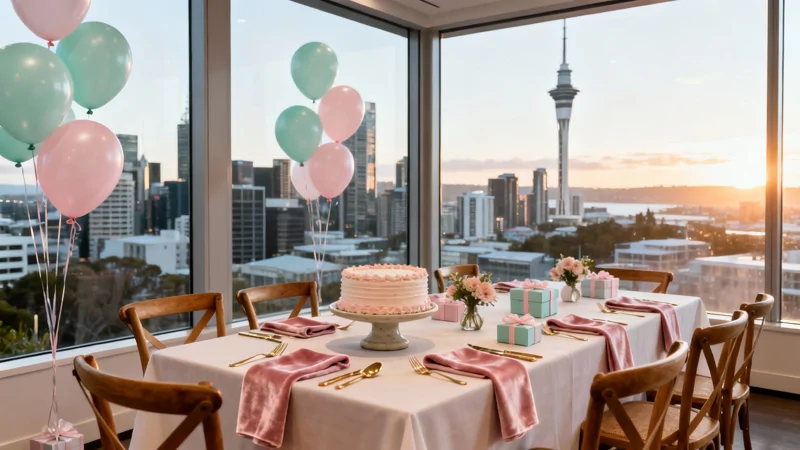
If you are comparing venues, our collated list of baby shower venues is a practical place to start. In other regions, I would still use the same filter. Look for venues that regularly host bridal showers, small birthdays, or daytime group bookings, because they usually have the right furniture, crockery, and staffing already in place.
The menu does a lot of the work here. Finger sandwiches, scones, slices, macarons, mini quiches, and a simple cake stand create a natural flow without the cost of a full plated meal. In New Zealand, this is also an easy place to add local touches such as club sandwiches, Afghan biscuits, Louise slice, fresh berries, or small savouries from a local caterer or bakery.
A few planning choices make the difference between lovely and fiddly:
- Choose a venue that includes service ware: Tiered stands, teapots, cups, plates, and cake forks are expensive to hire one by one.
- Ask about private-room minimums early: Afternoon tea can look affordable per person, but room hire and minimum spend rules change the overall budget quickly.
- Keep styling light: Fresh florals from a local florist, linen napkins from a party hire supplier, and printed menus are usually enough.
- Schedule speeches after the savoury course: Guests are settled, staff have finished the first rush of service, and people are still attentive.
- Confirm dietary handling in writing: Gluten-free, dairy-free, halal, and vegetarian requests are common, and venues vary a lot in how well they manage them. Our guide to managing dietary requirements at corporate events has great practical advice that is also relevant for private functions like baby showers
The trade-off is flexibility. This format leaves less room for messy activities, large gift-opening circles, or free-flow grazing over several hours. It suits a refined, intergenerational celebration better than a high-energy party. If that matches the guest list, a venue-hosted afternoon tea often gives the best balance of atmosphere, service, and low-stress planning.
Comparison of 10 Baby Shower Ideas
| Title | Implementation complexity | Resource requirements | Expected outcomes | Ideal use cases | Key advantages |
|---|---|---|---|---|---|
| Minimalist Botanical Theme | Medium, coordination of foliage and styling | Low–Medium, dried/fresh foliage, potted plants, linens, basic props | Timeless, photogenic aesthetic with eco-friendly tone | Garden venues, boutique cafés, vineyards, indoor spaces with natural light | Sustainable, versatile, budget-friendly, highly photogenic |
| Interactive Prediction & Well-Wishes Game | Low, simple setup and prompts | Minimal, cards, pens, box or digital form | Tangible keepsakes, increased guest engagement and stories | Any venue, hybrid/virtual events, small groups | Low cost, inclusive, creates lasting memories |
| Locally-Sourced Charcuterie & Grazing Boards | Medium, requires skilled arrangement and temperature control | Medium, local produce, cheeses, boards, caterer support | Social, flexible dining; visually appealing food station | Casual mingling events, wineries, venues with catering | Supports local producers, customisable, cost-effective vs plated meals |
| Gender-Neutral Nursery Essentials Registry | Low–Medium, curation and platform management | Low, online platforms, retailer links, product research | Practical, long-lasting gifts and reduced duplicates | Guests preferring practical gifts; modern parenting celebrations | Inclusive, eco-friendly, reduces waste and overlap |
| Pastel Dessert Table with New Zealand Treats | Medium, styling and temperature-sensitive setup | Medium, pastry suppliers, tiered stands, climate control | Dramatic, Instagram‑worthy focal point doubling as food service | Photo-focused events, venues with display space | High visual impact, supports local bakers, variety for diets |
| Personalised & Sustainable Keepsake Favours | Medium–High, sourcing, assembly, customisation | Medium–High, artisan goods, engraving, packaging | Memorable personalised mementos that double as décor | Small–medium gatherings, eco‑conscious hosts | High emotional value, sustainable, supports local makers |
| Virtual/Hybrid Celebration Option with In‑Venue Experience | High, AV setup, rehearsal, coordination | High, professional AV, reliable internet, technicians | Inclusive remote participation, recorded event, broader reach | Distant guests, mobility-limited attendees, large dispersed groups | Extends access, records moments, modern and inclusive |
| Activity Stations with a Cultural Inclusivity Theme | High, research, coordination, cultural consultation | High, multiple stations, facilitators, signage, space | Deeply meaningful, educational, highly personalised celebration | Multicultural families, community-focused events | Promotes inclusion, educates guests, personalised experience |
| Modern Essentials Raffle or Registry Bundle | Medium, bundle organisation and logistics | Medium, bulk essentials, storage, raffle materials | Practical gifting with gamified entertainment and fewer duplicates | Large groups, guests preferring practical contributions | Ensures needed items, flexible budgets, interactive fun |
| Venue-Hosted Afternoon Tea Style Celebration | Low–Medium, booking and menu coordination | Medium–High, premium venue, catering, table service | Sophisticated, intergenerational experience with minimal host effort | Refined or multi‑generational guest lists, boutique venues | Professional service, refined atmosphere, low host logistics |
Your Baby Shower Checklist Starts Here
The best baby shower ideas don't start with a trend. They start with the parents-to-be. If they love a calm, design-led gathering, a botanical theme or afternoon tea will probably feel right. If they're practical and want to avoid duplicate gifts, a registry, essentials bundle, or prediction station may suit them better. Good planning comes from choosing one clear direction, then making each decision support it.
Venue choice shapes more of the event than most hosts expect. A bright café with good service may need very little styling. A vineyard or garden venue can carry a botanical look naturally. A private room in a hotel or restaurant often makes afternoon tea and dessert service much easier. For regional families, the venue matters even more because weather, travel time, and local supplier access can affect every part of the day.
The easiest mistake is trying to do too much. A beautiful shower doesn't need a theme, a full game schedule, a huge favour table, a grazing spread, a dessert station, and a formal gift opening all at once. Pick two or three features that matter most. Usually that's the setting, the food, and one meaningful activity. When those are done well, the event already feels complete.
It also helps to think in layers rather than big one-off purchases. Start with the venue. Then confirm food. Then sort the one visual focal point, which could be flowers, cake, or a styled table. After that, add the practical extras such as signage, keepsakes, and favours. This approach keeps the budget under control and helps you spot what you don't need.
If you're planning for a group that includes different ages, cultures, or guests joining remotely, keep the format flexible. Not everyone wants baby shower games, and not every celebration needs to look the same. In many NZ settings, the most successful showers are the ones that feel generous, relaxed, and easy for people to join. Good food, clear timing, comfortable seating, and a warm welcome will usually matter more than novelty.
We've also seen how much stress disappears when hosts can sort the practical pieces in one place. Venue Finder NZ is a nationwide directory and enquiry platform for venues and suppliers across New Zealand, which makes it easier to line up spaces, catering, florals, cakes, and other event details without handling everything separately. That kind of coordination is often what turns a nice idea into an event that runs smoothly.
If you're ready to start, keep your first step simple. Choose the atmosphere you want. Then choose the venue type that supports it. Once those two decisions are made, the rest becomes far more manageable, and much more enjoyable.
Planning a baby shower in New Zealand is easier when your venue and suppliers are in one place. Browse Venue Finder NZ to explore baby shower venues, cafés, private dining spaces, vineyards, community venues, and trusted event suppliers for catering, cakes, florals, décor, and more.