 venuefinder.nz
What Does a Wedding Coordinator Do: Plan Your Dream Wedding
You're engaged. The messages are flying in, people are asking about dates, and your notes app is suddenly full of half-made decisions about venues, food, music, flowers, transport and where everyone is sleeping after the reception. It starts as excitement, then quickly feels like project management with higher stakes.
That's usually the point when couples ask a very practical question. What does a wedding coordinator do, and do we need one?

In New Zealand, that question matters even more than many couples realise. A coordinator isn't just someone who clips on buttonholes and tells guests where to sit. A good one protects the flow of the day, manages suppliers, keeps the timeline moving, handles weather pivots, and makes sure legal details don't get missed. If you're planning an outdoor ceremony, a multi-location day, or anything involving several moving parts, the difference is obvious.
Your Engagement Checklist Is Growing, What Now?
The first stretch of wedding planning often feels deceptively simple. You pick a date range, save a few venue ideas, maybe start talking colours. Then the admin arrives. Families want clarity, suppliers need replies, and every decision seems to trigger three more.
That overwhelmed feeling is normal. It doesn't mean you're disorganised. It means weddings involve logistics, timing, people management and contingency planning, all at once.
Why couples hit a wall so quickly
Most couples haven't planned a formal event before. They're balancing guest lists, budgets, work, family opinions and supplier availability, often while trying to enjoy being engaged. The emotional side of the day matters, but weddings still run on schedules, communication and clear responsibility.
A coordinator becomes useful the moment you realise you don't just need ideas. You need someone to organise decisions into a workable event.
A strong coordinator helps by:
- Turning scattered plans into a sequence so every supplier knows what happens, when, and where.
- Reducing decision fatigue by flagging what needs action now and what can wait.
- Protecting your attention so you're not answering supplier calls while getting ready.
- Managing the practical details that guests never see but always feel when they're done badly.
If you're already saying, 'I just need someone to take this over near the end', you're describing coordination.
It's not only for large or luxury weddings
There's a persistent myth that coordinators are only for elaborate weddings with huge budgets. In practice, they're often most valuable when the day has little room for error. A backyard wedding, a vineyard ceremony, a marquee reception or a rural venue can require tighter coordination than a more contained city event.
Match the support to the complexity of your day. Some couples need full planning from the start, while others have chosen most suppliers and need a professional to bring it all together in the final stretch.
If you're still getting your bearings, start with a practical first-steps guide like what happens next after your engagement. It helps you separate early decisions from noise.
The real value is peace of mind
The best reason to hire a coordinator isn't status. It's freedom. You should be able to spend your wedding morning feeling present, not fielding texts about table layouts, late vans or whether the celebrant has arrived. A coordinator gives your day an owner. That changes everything.
Planner vs Coordinator - Unpacking the Key Roles
Many couples often get tripped up. 'Planner', 'coordinator' and 'day-of' are often used interchangeably, but they aren't the same service.
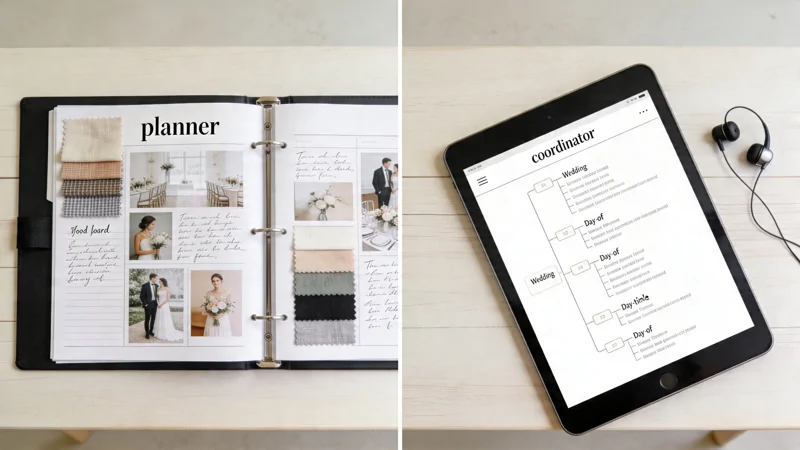
Think architect versus site manager
A wedding planner is the architect. They help shape the wedding from the beginning. That usually includes overall vision, budget guidance, supplier recommendations, design direction, logistics and decision-making across the full engagement.
A wedding coordinator is the site manager. They step in once the major decisions are made and make sure the plan is executable. Their focus is less about choosing the dream and more about making the dream happen properly.
This distinction matters because it tells you what you're paying for. If you need help selecting suppliers, building the budget and designing the whole event, a planner is the better fit. If you've done most of that work already, a coordinator is often enough.
What a coordinator is actually responsible for
According to Indeed's wedding coordinator job description, a day-of wedding coordinator's core duties include developing detailed timelines, attending rehearsals, serving as the primary point of contact for vendors, overseeing setup and cleanup, and handling unexpected challenges. The same source also makes an important distinction: the coordinator works for the couple, not the venue.
That last point is where confusion often starts.
Venue staff are there to run the venue well. They may be excellent, but their responsibility is the property, service flow, venue rules and on-site operations. Your independent coordinator looks across the whole day, including off-site preparation, supplier timing, personal items, family movement and ceremony flow.
What month-of usually means
'Day-of coordinator' sounds neat, but it's rarely how the job works in real life. Most effective coordinators begin before the wedding day itself. They need time to gather contracts, confirm timings, identify missing details, contact suppliers and build the master run sheet.
That's why many professionals offer 'month-of' coordination instead. The service typically begins in the final weeks, when the wedding already exists on paper and now needs proper oversight.
A simple way to decide:
- Choose full planning if you want guidance from the start.
- Choose coordination if your suppliers are booked and you need execution.
- Ask detailed service questions because package names vary between businesses.
If you're still comparing support options, this essential guide to Planning a Wedding in NZ can help you spot where you need the most help.
A Coordinator's Wedding Day Timeline and Tasks
The easiest way to understand what a wedding coordinator does is to follow the work in order. Most of it is done discreetly. That's why couples often underestimate it until they try to imagine the day without anyone in charge.
The takeover in the final stretch
In the lead-up, a coordinator gathers every confirmed detail and pressure-tests it. They review supplier bookings, contact each vendor, check arrival windows, confirm setup access, review ceremony order, and identify gaps. If no one has clarified who places signage, who cues the processional, or who packs gifts at the end of the night, the coordinator catches it.
In New Zealand, experienced coordinators often use software-based timeline management to sequence supplier activity. That level of detail is what keeps one late delivery from throwing off hair, transport, photos and the ceremony start.
What happens in the final week
The week before the wedding is where assumptions become risky. The coordinator usually attends the rehearsal, confirms key contacts, circulates the run sheet, checks weather plans, and locks down practical details that no one wants to debate on the day itself.
Typical checks include:
- Ceremony flow: Who walks when, where everyone stands, and what happens if someone is late.
- Supplier coordination: Final arrival times, unloading instructions, bump-in order and site access.
- Personal details: Place cards, candles, cake knife, signage, vows, emergency kit and anything sentimental.
- Pack-down planning: Who takes gifts, leftover cake, florals and personal décor after the reception.
The wedding day itself
On the day, the coordinator becomes the central point of contact. Suppliers don't ring the couple. They ring the coordinator. Family members with questions don't interrupt hair and make-up. They ask the coordinator. If the timeline slips, someone adjusts it in real time.
This often includes small but decisive tasks that never appear on a mood board. Straightening ceremony chairs. Solving a missing buttonhole. Reworking photo timing because transport ran late. Checking that the MC, photographer and caterer all share the same reception sequence.
Here's what that often looks like.
Wedding Coordinator Task Timeline
| Timeline | Key Coordinator Tasks |
|---|---|
| Final month | Collect supplier details, review contracts, build master timeline, confirm logistics, identify gaps |
| Final week | Attend rehearsal, circulate run sheet, confirm weather backup, check ceremony and reception details |
| Wedding morning | Coordinate supplier arrivals, oversee setup, answer questions, protect the couple from interruptions |
| Pre-ceremony | Cue wedding party, check ceremony layout, manage late changes, keep start time on track |
| During reception | Coordinate entrances, speeches, cake cutting, meal timing, dancing and supplier handovers |
| End of night | Oversee cleanup, pack personal items, confirm transport, make sure agreed pack-down happens |
If your priority is a calm event rather than a frantic one, planning a stress-free wedding day starts with clear ownership of these jobs.
Understanding the Cost of a Coordinator in NZ
Couples often want a simple price list. Coordinator pricing depends on scope, timing, and complexity. That's frustrating if you're trying to budget early, but it's also reasonable. A tidy single-site wedding with a short supplier list requires different work from a multi-location wedding with weather risk and extensive styling.
Common pricing models
The structure usually falls into three broad models.
- Fixed package fee: Common for month-of or day-of coordination. This works best when the service scope is clear and the wedding is reasonably standard.
- Hourly billing: More common for limited support, ad hoc consulting or partial coordination.
- Percentage-based fee: Usually tied to broader planning rather than coordination-only support.
The best pricing model is the one that makes the deliverables obvious. Couples run into trouble when the fee sounds clear but the service doesn't. 'Unlimited support' can mean very different things between businesses. Ask what is included.
What tends to push the fee up
Rather than focusing only on the quote, look at the factors behind it. A higher fee often reflects:
- A more complex timeline with multiple locations or cultural elements
- Outdoor logistics that require backup planning and supplier coordination
- Travel and regional access for weddings outside major centres
- A larger supplier team that needs more communication and scheduling
- Greater setup detail involving personal décor, signage, styling items or DIY elements
The smartest way to judge value is this. Will the coordinator remove enough pressure, risk and admin to justify the spend? If the answer is yes, the fee is doing more than buying 'help'. It's buying structure, accountability and a better experience on the day.
What not to do
Don't choose purely on the lowest quote. Cheap coordination can become expensive if the person lacks systems, confidence or local knowledge. It's also worth avoiding vague packages that promise 'support' without explaining start dates, contact limits, rehearsal attendance or pack-down responsibility.
Good coordination is practical. You should be able to see where the work goes.
How to Choose Your Perfect Wedding Coordinator
A wedding coordinator isn't just another supplier. They're the person standing in the gap between your plans and real life. That means personality fit matters, but process matters more.
Look for calm, not hype
The best coordinators don't usually sound dramatic. They sound clear. They explain how they work, what they'll take over, what they won't, and how they handle pressure. That's far more useful than polished language with no substance behind it. You want someone who can communicate firmly with suppliers, reassure family members, and make quick decisions without creating extra stress. Calm authority beats charm every time.
Ask questions that reveal how they think
A portfolio can show aesthetic taste. It won't tell you much about judgement under pressure. Consultations should.
Ask questions like:
- How do you build the wedding day timeline? Listen for specifics, not generalities.
- When do you start working with a couple? This shows whether 'day-of' really means proper lead-in support.
- What happens if a supplier is running late? You want process, not optimism.
- How do you coordinate with venue staff? This reveals whether they work collaboratively.
- What do you need from us in the final month? Strong coordinators have systems.
- What's your wet weather plan process? In New Zealand, this is essential.
Watch for practical warning signs
You don't need a coordinator who promises perfection. You need one who plans responsibly. Be cautious if they:
- Can't explain their handover process for the final month
- Speak dismissively about venues or other suppliers instead of describing collaboration
- Offer no clear boundary of service around setup, rehearsal or pack-down
- Rely on 'we'll figure it out on the day' as a planning philosophy
The right fit feels steady. You should leave the call thinking, 'they've done this before, and they know how to hold a day together'.
NZ-Specific Expertise Your Coordinator Must Have
New Zealand weddings come with local realities that generic overseas advice often skips. That's where genuine on-the-ground experience matters most.
Weather planning in NZ needs a real system
Local weather isn't a side note, especially for outdoor ceremonies, vineyard weddings, coastal venues and regional properties. A New Zealand coordinator should understand the difference between a nice-sounding backup plan and one that can be activated on time.
That includes practical questions such as:
- When is the call made to move indoors or bring in weather protection?
- Who contacts each supplier when the plan changes?
- What equipment is already secured versus what still needs to be sourced?
- How does guest movement change if the ceremony layout shifts?
Supplier knowledge saves time and stress
A local coordinator also knows who reliably services certain areas, how long travel really takes, and which logistics become difficult outside city centres. That's especially useful when your wedding includes rural transport, marquee infrastructure, or separate ceremony and reception sites.
Regional knowledge isn't about sounding impressive. It's about making good calls early, before a small issue becomes a day-of problem.
If you're ready to build your wedding team, start with Venue Finder NZ. We help you discover New Zealand venues and trusted suppliers, then send enquiries directly so you can move from browsing to booking with less stress.