 Venue Finder
A Winning Event Strategy to Drive Real Business Results
22 Jan 2026 by Venue Finder NZ
An effective event strategy is the blueprint that turns a simple gathering into a powerful business tool. It's what makes sure every single decision, from the canapés to the keynote speaker, aligns with measurable goals. Forget just logistics and schedules; a solid strategy is about achieving a tangible return on your investment and justifying every dollar spent.
Why Your Event Needs a Strategy, Not Just a Schedule
In a world where every business investment needs to prove its worth, running an event without a clear strategy is a huge risk. It's the difference between hosting a "nice" party and executing a targeted initiative that drives real, bottom-line results. Planners are under pressure to prove ROI, not just run a nice event.
Think of it this way: your strategy is the 'why' behind the 'what'. It ensures every element - from choosing a corporate event venue to finalising the agenda - serves a specific, thought-out purpose.
This approach flips the script, reframing your event from a cost centre to a strategic asset. By defining what success looks like before you even start planning, you create a framework for making smarter, goal-oriented decisions. This is absolutely vital when you're diving into the nitty-gritty of corporate event planning.
Aligning Stakeholders for a Unified Purpose
One of the very first hurdles in building a robust event strategy is getting everyone on the same page. It's no secret that different departments often have competing priorities:
- Marketing is focused on generating leads and boosting brand awareness.
- HR wants to lift employee engagement and nurture a positive company culture.
- Leadership needs to see a clear return on investment and increased industry influence.
- Sponsors are there to connect with their target audience and prove the value of their partnership.
An effective strategy takes these diverse goals and weaves them into a single, cohesive vision. This ensures every team is moving in the same direction, preventing confusion and significantly maximizing your event's impact by guiding every decision and aligning stakeholder expectations towards a common, measurable outcome.
Choosing the Right Event Format
The format you choose is a massive strategic decision, not just a logistical one. It has to match your goals.
For example, a large-scale conference is perfect for broad industry outreach and establishing thought leadership, which naturally calls for an impressive conference venue. On the other hand, a hands-on workshop is much better suited for deep skill development and demands a more intimate, collaborative setting.
And then there's the classic company off-site, designed to build team morale and cohesion. This type of event often benefits most from a unique and inspiring location that gets everyone away from their desks and thinking differently.
Getting Stakeholders Aligned on a Unified Vision
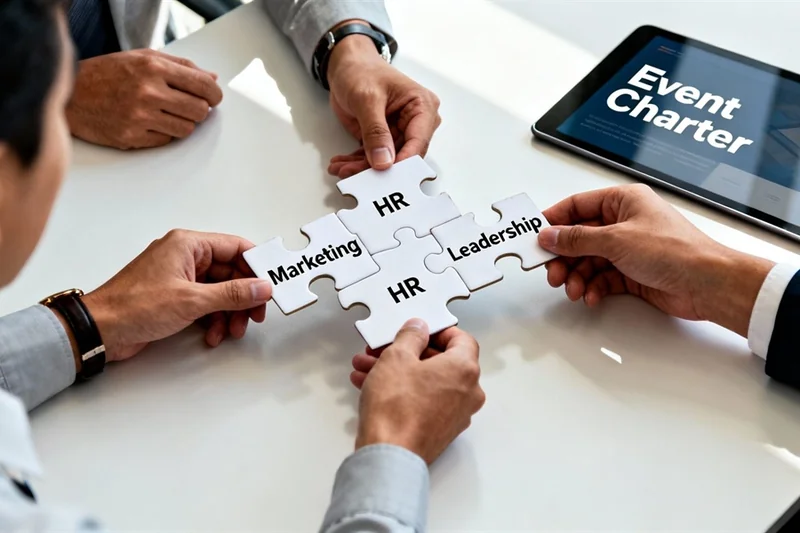
A powerful event strategy doesn't start with scouting venues or tasting menus. It begins with getting everyone in the same room, rowing in the same direction. One of the biggest hurdles any event planner faces is trying to manage the different, and often competing, priorities coming from various departments.
Without a single, unified purpose, your event can quickly unravel. It becomes a collection of disconnected activities instead of a focused initiative that actually drives the business forward.
Think about it: each department sees the event through its own lens. Marketing is chasing leads and brand awareness. HR is focused on team morale and celebrating company culture. And up in the C-suite, leadership just wants to see a clear return on investment. The real magic happens when you can blend these separate goals into one cohesive vision that everyone genuinely supports.
Uncovering Core Objectives
To build a unified vision, it is important to take proactive steps and engage directly with each stakeholder group. Instead of sending out surveys, facilitating workshops or conducting simple one-on-one conversations can uncover deeper insights beyond surface-level requests. Your role involves acting as both a translator and strategist, integrating all feedback into a central mission for the event. By asking targeted questions, you can identify what truly matters to each team. This method is crucial because it ensures everyone feels acknowledged and sees their objectives embedded into the event's core from the outset. Useful questions to guide these discussions include:
- For Marketing: Consider what the event should achieve for the brand, such as generating new leads, strengthening customer loyalty, or gaining media attention.
- For HR: Determine what success looks like from an employee perspective, whether it's boosting morale after a challenging period, celebrating milestones, or encouraging departmental collaboration.
- For Leadership: Explore how the event's success will be measured against annual business goals and identify specific metrics that will demonstrate a worthwhile investment.
- For Sponsors: Discuss what type of audience engagement would provide the most value for their brand, making the partnership beneficial.
From these essential discussions, an event charter should be developed, serving as a guiding document. It clearly outlines the event's main purpose, key objectives, and the metrics for measuring success. With this in place, every subsequent decision, from the agenda to the choice of corporate event venue, is aligned and justifiable.
Choosing the Right Event Format
Once your objectives are crystal clear and everyone's on board, you can start thinking about the format. This decision is far more than just logistics; it’s a core part of your event strategy. The format you choose needs to be the best vehicle to deliver on your newly unified goals.
For instance, a large-scale industry conference is perfect for generating a high volume of leads and positioning your brand as a thought leader. This naturally requires a significant conference venue. On the other hand, if your goal is deep skill development, then an intensive, hands-on workshop in a more collaborative space is a much better fit.
And if the main objective is to boost team morale and strengthen company culture? An off-site retreat in an inspiring, out-of-the-office location will almost certainly deliver the biggest impact. By aligning the format with your goals, you're not just planning an event; you're designing an experience built for maximum effect.
Defining Success Before You Book a Venue
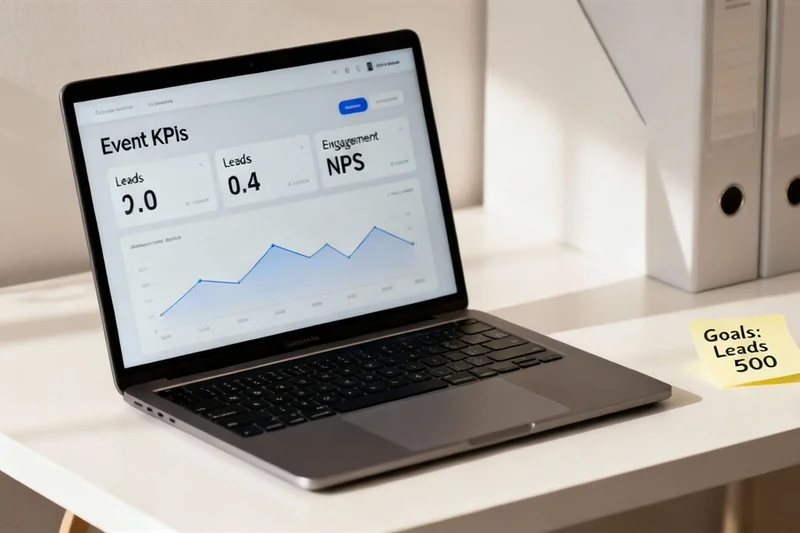
It’s easy to get swept up in the excitement of planning an event, with visions of stunning venues and happy guests. But hold on. Before you even think about looking at a single corporate event venue, there's a critical step that's often missed: defining what success actually looks like.
This is where a solid event strategy comes in. It's about moving past fuzzy goals like 'boosting brand awareness' and getting crystal clear on concrete, measurable outcomes. Think of it like building a results dashboard for your event before a single guest has walked through the door.
Without this, you're essentially flying blind. You'll have no real way to know if your efforts paid off, let alone justify the budget for your next event.
Establishing Your Key Performance Indicators
Your Key Performance Indicators (or KPIs) are the hard numbers you'll use to track whether you're hitting your goals. These metrics are not arbitrary; they are directly tied to your event's core purpose and influence every decision you make, from the agenda to the technology you select. Let's make this real. Here are a few examples for different types of events:
- For a Sales Conference: The objective is likely to accelerate the sales cycle. Your KPIs could include the number of qualified leads generated, meetings booked on-site, or the total value of new business influenced by the event.
- For a Corporate Off-Site: The focus here is on people. Success might be measured by achieving a post-event employee satisfaction survey score of 90% or higher, or realizing a 20% drop in voluntary staff turnover in the following quarter.
- For an Industry Trade Show: Lead generation is crucial. You might aim to capture 500 new Marketing Qualified Leads (MQLs) or deliver a specific number of product demos at your stand. By setting these KPIs before planning, you create a powerful filter for every decision, ensuring that every element of your event actively contributes to a measurable outcome, which is essential for demonstrating a strong return on investment.
Setting Up Your Measurement Tools
Okay, so you have your KPIs. The next question is, how are you going to track them? This isn't something you figure out afterwards. You need the right systems in place from day one.
Modern events give us plenty of tools to capture amazing data. Event apps are great for monitoring which sessions are popular and how engaged people are. Live polling can give you a real-time pulse check on audience sentiment. For tracking leads and customer conversations, a seamless link to your company's CRM is non-negotiable.
And don't forget the power of a simple post-event survey. They are gold for gathering feedback and understanding how people really felt. These tools aren't just for creating reports; they give you priceless insights to make your next event even better.
For a deeper dive into practical planning, check out our corporate event planning tips to ensure success.
Choosing the Right Format to Achieve Your Goals
Deciding on your event's format is a huge part of your event strategy, not just another item on a logistics checklist. Think of it like this: you wouldn't use a hammer to turn a screw. Picking the right format - whether it's a huge conference, a hands-on workshop, or a focused off-site retreat - is a strategic move that directly shapes whether you hit your goals.
Each format has its own superpowers. Your job is to match the format to the goals you've already set out. Get this right, and you're on track to deliver incredible results and a fantastic return on your investment.
Large-Scale Conferences for Broad Impact
Conferences are absolute powerhouses for making a big splash, establishing thought leadership, and generating a tonne of leads. Their real strength is in gathering a large, diverse crowd all in one place. This makes them the perfect choice when your main aim is to broadcast a message far and wide, cement your brand as an industry leader, or simply fill the top of your sales funnel.
With events of this size, your choice of conference venue is absolutely critical. You need more than just a big room; you need a space that reflects the professional image you want to project and has the right infrastructure for keynote stages, breakout sessions, and all-important networking zones.
Workshops for Deep Skill Development
Where a conference goes broad, a workshop goes deep. This format is ideal for intensive training, hands-on skill-building, or gathering a group to collaboratively solve a problem. It emphasises active participation, not just passive listening. If your strategic goal is to upskill your team or guide customers through a complex new product, a workshop is your most effective option. These events excel in more intimate, collaborative spaces that encourage discussion and teamwork - think boardrooms with smart technology or creative studios that inspire new ideas. Choosing a workshop format communicates your commitment to providing real, tangible value to a smaller, more focused group. Success is measured not by the number of attendees, but by the skills and knowledge they gain.
Off-Sites for Culture and Connection
When your goals are more internal - like boosting team morale, strengthening bonds, or sparking some creative, out-of-the-box thinking - nothing beats a company off-site. Pulling your team out of their everyday environment strips away the usual distractions and opens the door for a totally different kind of interaction. It's one of the best ways to build a stronger, more connected company culture.
The venue for an off-site plays a massive part in its success. Unique and inspiring locations can ignite creativity and make your team feel genuinely appreciated. Whether it's a secluded retreat centre, a unique country estate, or an activity hub in the city, the space should match the goal of rejuvenation and team building.
If you're looking for inspiration, our guide to unforgettable team building activities in Auckland has some brilliant ideas to get you started.
Finding a Corporate Event Venue That Elevates Your Strategy

Alright, you've got your stakeholders on board and you know what success looks like. Now, your event strategy stops being a document and becomes the compass for all your practical decisions. The biggest one? Choosing your venue.
It's a classic mistake to see the venue as just a backdrop for your event. Think of it more as an active participant - a partner in hitting your goals. The right space doesn't just host your event; it elevates it. The wrong one can actively sabotage your objectives, no matter how brilliant the rest of your planning is.
Your strategy is what turns this from a simple logistical task into a powerful strategic move. For instance, if your whole game plan is about high-level networking and sealing deals, you'll need a corporate event venue with quiet, sophisticated breakout lounges that practically invite conversation. But if you're trying to spark innovation, a modern, tech-ready conference venue with flexible layouts is a non-negotiable.
Linking Venue Features to Strategic Objectives
To make a smart choice, you have to look past the obvious details like cost and location. Your strategy gives you a far more meaningful checklist. Every feature of a potential venue should connect directly back to a specific goal you need to achieve. Start asking these kinds of strategic questions when you're scouting spaces:
- Atmosphere and Brand Alignment: Does this place feel like us? A luxury brand hosting VIPs needs a completely different vibe to a tech start-up launching a disruptive new product. The venue's style should reflect your brand and the mood you want to create.
- Layout and Flow: Can the floor plan support your agenda? If your strategy is all about collaboration, you need spaces that encourage people to mingle and chat. A formal awards night, on the other hand, demands a clear stage and theatre-style seating.
- Technology and Infrastructure: Does the venue's tech stack up to your KPIs? If a key success metric is how many virtual attendees engage with your content, you need rock-solid Wi-Fi and built-in hybrid event gear. No exceptions.
The perfect venue acts as an extension of your event strategy, physically embodying your goals and ensuring the environment supports the achievement of your desired outcomes. The business events sector is a significant driver of regional growth here in New Zealand. We know that visitors attending conferences spend a lot more than the average tourist. By late 2024, corporate and association bookings had bounced back in a big way, showing just how much everyone values getting together in person again. Picking the right venue is how you tap into that energy.
Discovering Venues That Match Your Vision
Finding a space that ticks all these strategic boxes can feel like a tall order, but it doesn't have to be a headache. We have brought together a huge range of spaces across New Zealand designed to fit any event strategy you can dream up.
Whether you're after a sleek urban boardroom for an executive off-site or a massive regional conference centre for an industry summit, we can connect you with the right options. Check out our handpicked selection of top corporate event venues to find a space that will bring your strategic vision to life.
Common Questions About Event Strategy
Even the most experienced planners have questions when putting together a new event strategy. Let's tackle some of the most common ones I hear, with clear answers to help you move forward with confidence and build a plan that actually works.
How Do I Get Leadership to Buy Into a Strategy?
I've been in this exact spot. The key is to frame the conversation around two things every leader cares about: return on investment (ROI) and managing risk.
Explain that a clear strategy isn't just fluffy planning; it's what directly connects the event's cost to real business outcomes, like generating qualified leads or boosting employee retention. Present it as the essential groundwork needed to guarantee the event delivers tangible value and isn't just another expensive line item on the books. A quick, one-page proposal outlining the KPIs you plan to track is a powerful way to show you're already thinking about the bottom line.
What's the Real Difference Between Goals and Objectives?
This is a brilliant question, and getting this right is crucial for a strong event strategy. Honestly, it trips a lot of people up.
Think of it this way:
- Goals are your big-picture, aspirational dreams. A classic example is, "To become a recognised thought leader in our industry." It's the 'what' you want to achieve.
- Objectives are the concrete, measurable steps you'll take to get there. For instance, "Secure speaking slots for three of our executives" or "Achieve 50 media mentions from top-tier publications." These are the 'how'.
Your strategy needs to be built on these clear, quantifiable objectives. They make success easy to define, track, and ultimately, report back to your stakeholders. No ambiguity, just results.
Does a Strategy Even Matter for Smaller Events?
Absolutely. The principles of a good event strategy scale perfectly, whether you're planning a massive trade show or an intimate team meeting. Don't let the scale fool you.
For an internal team workshop, your 'stakeholders' are simply the team members and their manager. The 'goal' might be something like improving cross-departmental collaboration. A solid 'objective' to support that could be to "achieve a 90% positive feedback score on a post-event survey about team cohesion."
Even your choice of a corporate event venue is a strategic decision. You'd pick an off-site creative space to spark innovation, whereas a formal boardroom is chosen specifically to encourage focus. Every choice, big or small, serves the ultimate objective, regardless of the event's size.
Ready to put your strategy into action? We connect you with the perfect spaces to bring your vision to life. Start your search for the ideal venue today.
Related posts

Plan Your Party for Christmas: Top NZ Christmas Party Themes
Discover 10 unique venue & theme ideas for your party for Christmas 2026. Find perfect Auckland, Wellington, or Christchurch locations on Venue Finder NZ.
10 Jun 2026

Reducing Waste at Corporate Events: Practical Ways for Reducing Waste
Explore practical, cost-neutral tips for reducing waste at your next corporate event. Create a greener conference with our concise, actionable guide.
19 Apr 2026

Your Guide to a Sustainable Corporate Event in New Zealand
Plan a sustainable corporate event with our expert guide. Discover eco-friendly venues, waste reduction tips, and how to measure your green impact.
19 Apr 2026